The threat of subversion
By Professor Christopher Andrew, author of “The Defence of the Realm“.
Until the mid-1980s successive governments, as well as the Security Service, remained concerned by the threat of Communist and Trotskyist subversion. In MI5’s view, however, Whitehall sometimes adopted a broader definition of subversion than its own. The future Director General, Sir John Jones, noted in 1977: ‘There is a natural tendency for senior officials (and in this they reflect the views of the Ministers they serve) to equate subversion with activity which threatens a Government’s policies or may threaten its very existence.’ Prime Minister Edward Heath believed that at times MI5 ‘took too relaxed a view’ of the subversive threat to British industry.
Harold Wilson, during his final term in office as Prime Minister (1974-6), as his health began to decline, became prey to what his senior policy adviser, Bernard Donoughue, called ‘near paranoia about plots by various imaginary and genuine enemies’. High on the list of imaginary enemies was MI5, who, Wilson persuaded himself, was bugging him and plotting his downfall. The Cabinet Secretary, Sir John Hunt, arranged a meeting between Wilson and the DG, Sir Michael Hanley, in 1975 in an attempt to clear the air – but to no effect. Hanley later recalled that they had ‘a terrible row’: ‘I could not get off the hook. He got the idea I was his worst enemy. I did not know what to do.’ For a time the DG contemplated, but in the end rejected, the idea of resignation. (See also “The ‘Wilson Plot’“.)
An MI5 assessment soon after James Callaghan became prime minister in 1976 identified the Communist Party of Great Britain (CPGB), despite its electoral failure, as a major subversive threat within the trade union movement, intent on disrupting the economic policy of the elected government. Like both Heath and (later) Margaret Thatcher, Callaghan was deeply suspicious of the miners’ leader, Arthur Scargill, on whom MI5 had obtained a Home Office Warrant (HOW) in 1973, believing that he was a Communist sympathiser. During the Grunwick industrial dispute in 1977, for example, Callaghan ordered: ‘Keep me informed about Scargill’s movements.’
Despite the CPGB’s allegedly subversive economic designs, the Security Service believed that it had little influence on the industrial disruption which dogged Callaghan’s final two years in office. MI5 reports made clear that the strike-bound ‘Winter of Discontent’, which was a major cause of Labour’s election defeat in 1979, did not derive from either a Communist or a Trotskyist master plan. The main subversive threat which MI5 identified during the Callaghan era was political rather than industrial: the ‘entryist’ policy of the Trotskyist Militant Tendency designed to subvert Labour Party democracy, which a decade later led to Militant’s expulsion from the Party.
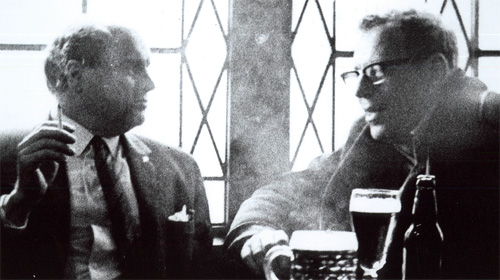
An MI5 assessment soon after James Callaghan became prime minister in 1976 identified the Communist Party of Great Britain (CPGB), despite its electoral failure, as a major subversive threat within the trade union movement, intent on disrupting the economic policy of the elected government. Like both Heath and (later) Margaret Thatcher, Callaghan was deeply suspicious of the miners’ leader, Arthur Scargill, on whom MI5 had obtained a Home Office Warrant (HOW) in 1973, believing that he was a Communist sympathiser. During the Grunwick industrial dispute in 1977, for example, Callaghan ordered: ‘Keep me informed about Scargill’s movements.’
Despite the CPGB’s allegedly subversive economic designs, the Security Service believed that it had little influence on the industrial disruption which dogged Callaghan’s final two years in office. MI5 reports made clear that the strike-bound ‘Winter of Discontent’, which was a major cause of Labour’s election defeat in 1979, did not derive from either a Communist or a Trotskyist master plan. The main subversive threat which MI5 identified during the Callaghan era was political rather than industrial: the ‘entryist’ policy of the Trotskyist Militant Tendency designed to subvert Labour Party democracy, which a decade later led to Militant’s expulsion from the Party.
Awards and Support